The switch is on the wall. The plate is fine, and you want to keep it. The problem sits behind it: many UK back boxes have no neutral, and most Minis expect one. That is why people end up searching Shelly 1L vs Mini. The answer depends on one fact about your box, not on which device is newer. Behind The Switch is an independent UK seller of Shelly products, and this guide covers the choice once that fact is known. If your box does have a neutral and you want the fitting side, read how to fit a Shelly Mini behind a UK light switch instead.
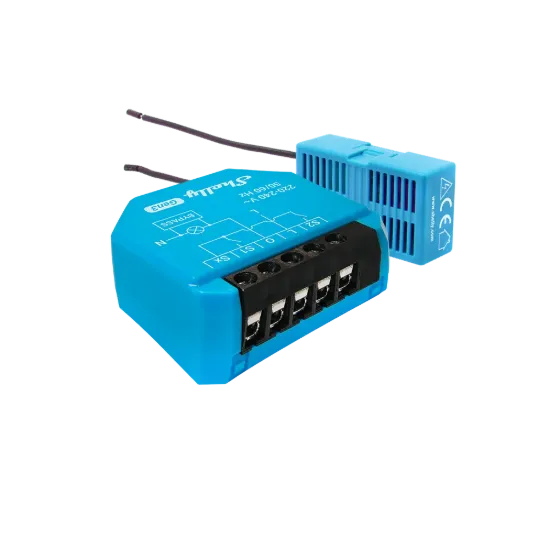
The pack shot shows the cyan 1L relay with the small Bypass beside it. Both arrive together in one box.
Why a UK switch often has no neutral
In many older UK lighting circuits, the switch only needs to break the supply to the light. So only the live side of the circuit comes down the wall to it. The neutral stays at the ceiling rose or the lamp, where the light is. It never reaches the back box.
For a plain switch, that was never a problem. A switch does not need power of its own. It just opens and closes. A smart relay is different. It has to stay powered while the light is off, so it can listen for the app, a schedule or a sensor. Most relays get that power from a neutral in the box.
Newer work more often brings a neutral down to the switch, partly because smart controls expect it. So a house rewired recently may have one, while a house with its original lighting circuits may not. Even within one house, rooms can differ if some circuits have been altered.
You cannot tell which you have from the front of the plate. An electrician looking in the box can say whether a neutral is there. If you cannot tell, do not guess. This guide is not electrical advice, and it does not show you how to check.
What it does cover is which body to buy once that fact is known. That is the whole decision: neutral present, or not.
Mini: only if the box already has one
A Mini is a small Wi-Fi relay built to sit in a UK back box, behind the switch you already have. The plate stays on the wall, and the switch still works the light as it always did. The Mini adds app control, schedules and sensors on top.
The usual example is the Shelly 1PM Mini Gen4. It switches one lighting load and reads the power it draws.
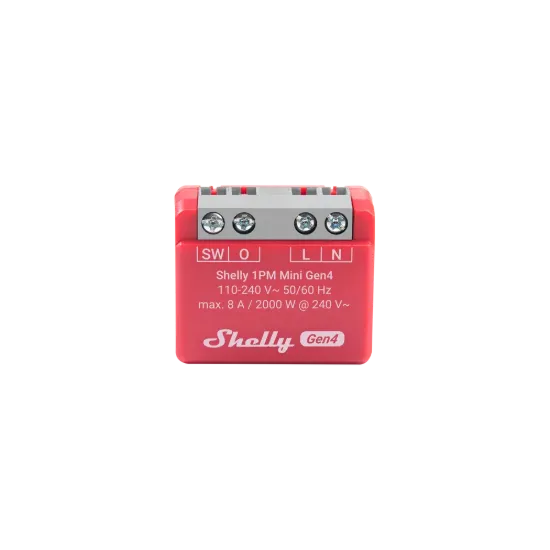
This is the 1PM Mini Gen4 on its own. It is a compact module meant to sit behind the plate, out of sight.
Most Minis need a neutral at the module. That is how they stay powered while the light is off. So the question from the previous section decides everything here.
If your box has a neutral, a Mini is still the usual starting point. It is the simplest way to keep the plate and add smart control. Fitting is covered in the first guide, linked above. If you are still deciding between body types, the Mini vs Pro vs BLU vs Wave guide sets out where each one lives. You can also compare the full range of Mini relays.
If your box has no neutral, a Mini is the wrong buy. It is not a device you can make work by adding a Bypass or another accessory. The Mini is not the wrong device. It is the wrong device for that box.
This matters because it is an easy mistake to make. A Mini is the device most people see first, and a box without a neutral looks exactly like a box with one until someone opens it. Buying the right body first saves a second order and a second visit.
Whichever device you choose, fitting is mains work for a person competent to work on UK lighting circuits.
1L: the relay for a box without one
The 1L is an in-wall relay, not a Mini. It does the same basic job, sitting behind the existing switch so the plate stays, but it is built for a lighting circuit with no neutral at the switch. It draws the small amount of power it needs through the light itself, rather than from a neutral in the box.
The example is the Shelly 1L Gen3. It switches one light, on or off, up to 200 W, from a box that has no neutral. At 37 × 42 × 16 mm it is larger than a Mini, so box depth matters. It connects over Wi-Fi, has Bluetooth as well, and is added in the Shelly Smart Control app, the same app used for a Mini.
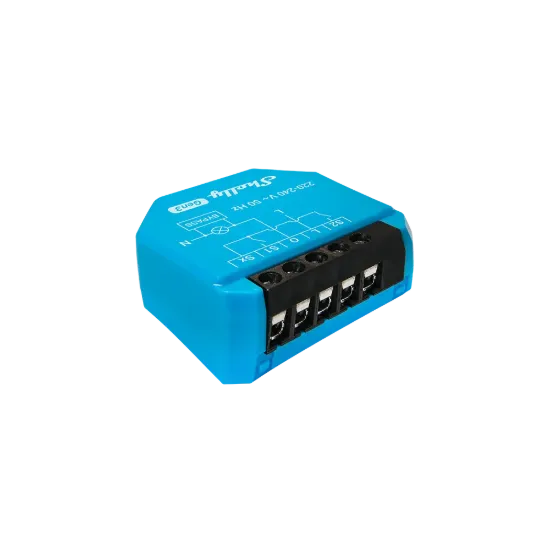
Here the 1L is shown on its own, without the Bypass. The relay body is the part that goes behind the switch.
A Shelly Bypass comes in the box with the 1L. Whether you need it depends on the lamp, which the next section explains. For now, the point is that you do not need to buy one separately for a 1L.
From the front, nothing changes. The switch on the wall still turns the light on and off. The difference is behind it: the 1L lets the app, a schedule or a sensor operate the same light, on a circuit where a Mini would have no way to stay powered.
The 1L is on and off only. It is not a dimmer. If you want to dim the light, that is a different device, covered further down.
Ratings, sizes and supported loads are on the product page, along with the manual that shows the terminal layout. Those are the figures to check before buying, not a summary here. Fitting a 1L is mains work for a competent person; nothing here is electrical advice.
If the box has room and the lamp suits it, the 1L is the usual answer to a no-neutral switch.
The Bypass sits at the lamp
The Bypass is the part people most often misunderstand. It is not a second switch. It is not a Mini, and it is not a relay. It is a small accessory that sits at the lamp, in parallel with the load, not in the back box.
Its job comes from how the 1L stays powered. With no neutral, the relay draws a small current through the light, even when the light is off. An incandescent bulb lets that through without fuss. Many LED lamps draw so little that the relay cannot work reliably, and some may glow or flicker when they should be off. The Bypass gives that small current another path, at the lamp, so the relay can run LED lamps that would otherwise not draw enough.
On this shop's product page the rule is simple. LED lamps on the first channel need the Bypass fitted beside the lamp. An incandescent lamp can run without it. Most UK homes now use LEDs, so in practice most 1L jobs use the Bypass.
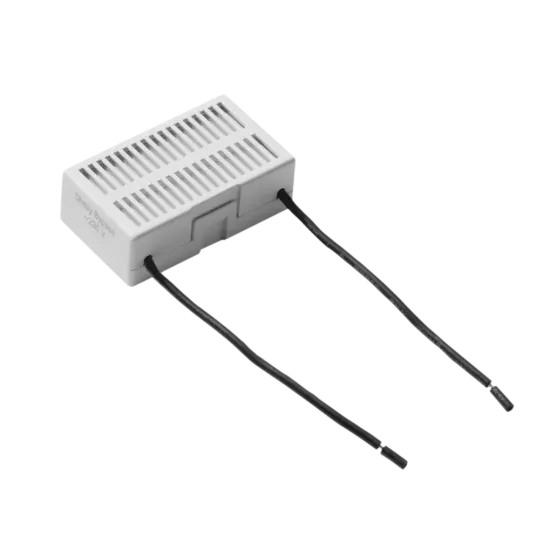
It is a small component, much smaller than the relay, and it is fitted at the light rather than behind the switch.
The 1L Gen3 includes one in the box. The standalone Shelly Bypass is for when you need that accessory on its own, such as a replacement. It is sold separately for that reason, not because the relays come without one.
It is worth being clear about what the Bypass does not do. It does not turn every relay into a no-neutral device. It will not make a Mini work in a box without a neutral. On this site it pairs with the Shelly 1L Gen3 and the Shelly Dimmer Gen3, and the product page lists them.
How it is connected is in the manual, and it is a job for whoever fits the relay. Other fitting parts are listed under accessories.
Two circuits, dimming, or a socket instead
Not every no-neutral job is one light on one switch. These are the common off-ramps.
Two lighting circuits from one box. If one wall box controls two separate lights, such as a two-gang switch, Shelly makes a two-channel no-neutral relay, the 2L Gen3. We don't currently stock it.
Dimming. The Shelly Dimmer Gen3 sits behind a wall switch, dims the lights and does not need a neutral. It is a trailing-edge dimmer rated up to 200 W. Without a neutral, the load needs to be at least 20 W; below that, a Shelly Bypass fitted at the lamp lets it run. Check that the lamps are dimmable and read the manual on the product page before buying. The 1L is on and off only; it will not dim.
A lamp in a socket. For a table or floor lamp that plugs in, you may not need any back-box work at all. The Shelly Plus Plug UK goes into a standard socket. No electrician, no back box, and no question about neutrals.
A tight box, or several circuits at the board. If the back box has no room, or you want to control several circuits from the consumer unit, that is a Pro. The body-type guide linked earlier covers it.
Each of these is a separate decision. If none fits, go back to the simple case: one light, one switch, and the question of whether the box has a neutral.
A simple way to choose
Once you know whether the back box has a neutral, the choice is short. Match your situation to one line.
- Neutral already in the back box, keep the plate. Choose a Mini. It is the usual starting point, and fitting is covered in the first guide.
- No neutral at the switch, one lighting circuit, on or off. Choose the 1L. The Bypass comes in the box and is fitted at the lamp for LEDs.
- No neutral, and you want to dim. Choose the Dimmer Gen3. It needs no neutral; add a Bypass at the lamp if the load is under 20 W.
- Lamp in a socket, no wall-box job. Choose the Plus Plug UK. It goes into the socket and needs no electrician.
If you are not sure whether there is a neutral, that is the first question to settle, not the last. An electrician can tell you by looking in the box. Buying before you know is how people end up with a Mini they cannot use.
Many homes end up with more than one answer. A newer kitchen circuit may have a neutral while an original bedroom circuit does not, so a Mini in one room and a 1L in another is common. Decide room by room.
Specifications, supported loads and manuals live on each product page. Check them before you decide, and pass them to whoever is doing the fitting.
To compare every relay body, including the Mini and 1L, browse all relays.